Everything You Wished Someone Had Told You About Pensions
February 2025 event - Your pension: practical steps to get ahead
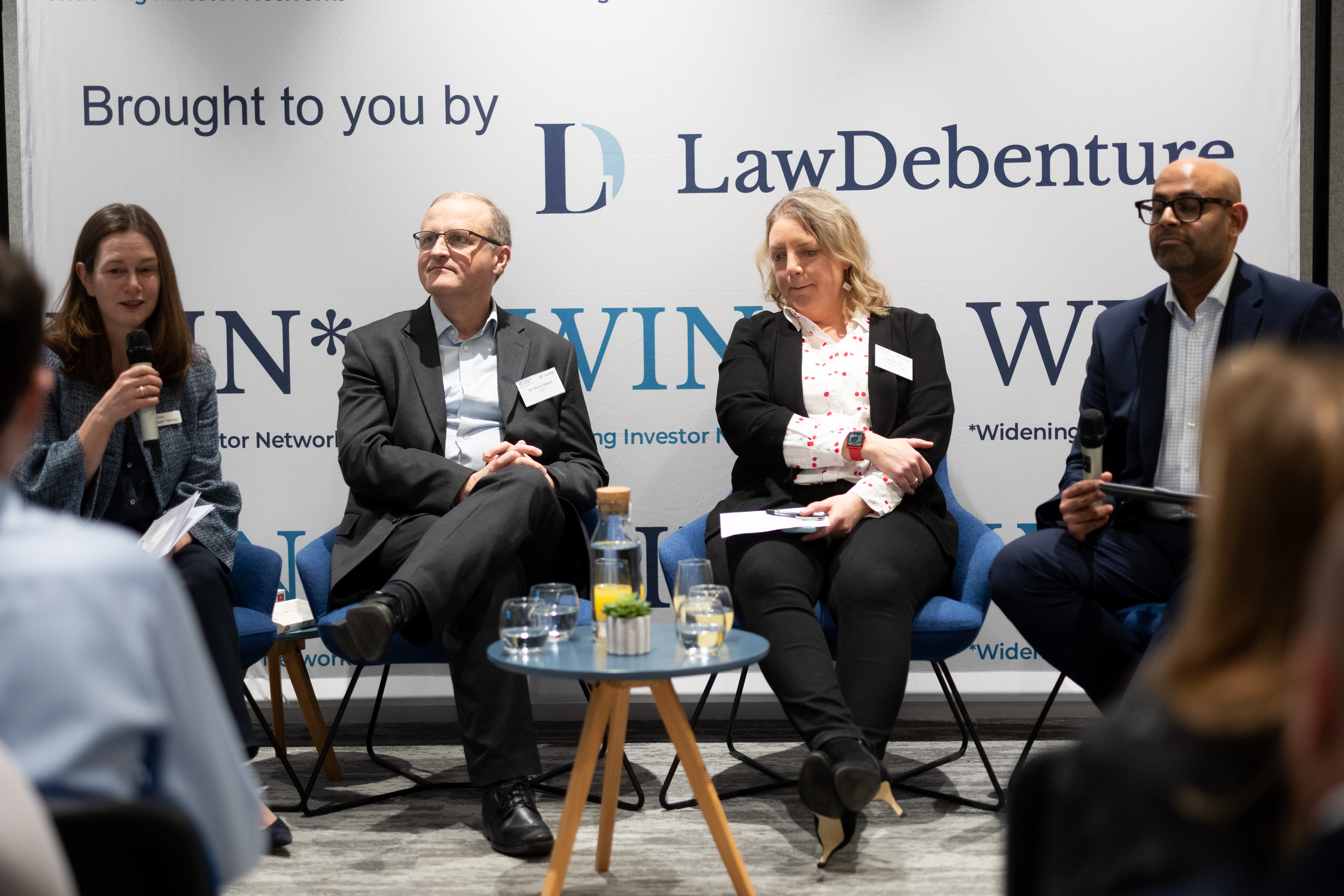
Pensions have a reputation for being complicated, dull, or something to worry about later. Our latest WIN (Widening Investor Network) event set out to fix that. Here are the key takeaways from an evening that covered everything from the basics to some genuinely useful tips that even experienced savers might not know.
First, the Jargon Buster
There is more than one kind of pension, and knowing the difference matters.
The state pension is what you receive from the government in return for your National Insurance contributions. You need 35 qualifying years to get the full amount, which is currently worth around £12,000 a year. It is protected by the triple lock, meaning it rises each year by whichever is highest: inflation, wage growth, or 2.5%. State pension age is currently 67.
Workplace pensions are what your employer sets up for you. Since auto-enrolment was introduced just over a decade ago, anyone earning above roughly £10,000 a year is automatically enrolled unless they actively opt out. Most modern workplace pensions are defined contribution (DC), meaning you build up a pot of money that is invested and hopefully grows over time.
Defined benefit pensions (also known as final salary pensions) are largely a thing of the past in the private sector. They pay a guaranteed income for life on retirement, which is why they are so valuable. Public sector workers, including teachers, NHS staff and civil servants, still tend to have them.
SIPPs (self-invested personal pensions) are private pensions you set up yourself, giving you broader control over where your money is invested. You can hold a SIPP alongside a workplace pension, as long as you stay within the annual contribution limit.
Start Early. Seriously.
The single most powerful force in pension saving is compounding, where your investment returns start generating their own returns. The earlier you start, the longer this snowball has to roll.
One panellist shared their own cautionary tale: by not joining their workplace pension in their first job (they stayed seven years, not the one they expected), they missed out on what could have been around £15,000 in contributions. Had that money been invested in a low-cost index fund tracking the US market throughout, it could now be worth close to £62,000, and potentially over £300,000 by retirement. That is the cost of starting late.
Even small amounts make a difference. A modest monthly contribution in your 20s, combined with employer contributions and tax relief, adds up substantially over a working life.
Your Employer Is Handing Out Free Money
Auto-enrolment requires employers to contribute a minimum of 3% of your basic salary into your pension. But many employers will match contributions above that minimum if you pay in more yourself. This is one of the most valuable and underused benefits in employment.
Before accepting a job offer, it is worth asking HR exactly what the pension match looks like. If you pay in 6%, will they pay in 8%? 10%? There is no standard rule in the private sector, and the gap between employers can be significant. If you are already in work and are not sure what your employer offers, it is worth an email to HR to find out.
The key message: if you are not contributing enough to get your full employer match, you are leaving free money on the table.
Salary Sacrifice: Not as Grim as It Sounds
Salary sacrifice (sometimes called salary exchange) is a tax-efficient way of making pension contributions that is used by most large and medium-sized UK employers. Rather than taking all your salary and then paying into your pension from take-home pay, you agree to receive a lower salary in exchange for higher employer pension contributions.
The benefit is that you pay less income tax and less National Insurance on the sacrificed amount, and so does your employer. With employer National Insurance rates rising, this arrangement is becoming even more attractive for businesses, which may make them more willing to structure contributions this way.
One specific scenario worth knowing about: if you earn between £100,000 and £125,000, your personal tax allowance is gradually withdrawn, creating an effective 60% tax rate on that band of earnings. Making additional pension contributions through salary sacrifice can bring your taxable income below £100,000, restoring your personal allowance and potentially preserving entitlement to tax-free childcare or free nursery hours, which disappear the moment earnings cross that threshold. The combined saving can run to thousands of pounds a year.
How Much Is Enough?
This is the question most people find hardest to answer. There are two useful approaches.
The first is to think in terms of a replacement ratio: most people find they need roughly two-thirds of their working income in retirement, because costs like commuting, National Insurance, and mortgage payments typically fall away.
The second is to look at what you actually want retirement to look like. The Pensions and Lifetime Savings Association (PLSA) publishes "retirement living standards" figures that break down what a minimum, moderate, and comfortable retirement actually costs in practical terms, from running a car to going on holiday. These figures are worth looking at as a reality check.
Once you have a target income in mind, get a state pension forecast (via the government gateway website) to see where you stand. Most people in future will receive the flat-rate figure of around £11,500 a year. For couples, that is potentially £23,000 between them, which provides a meaningful base to build on.
The gap between your state pension and your target income is what your workplace and private savings need to cover.
The Gender Pensions Gap Is Real
Women retire with substantially lower pension pots than men on average, and yet typically need that money to last longer. The causes are structural: the gender pay gap means lower contributions throughout a career, and career breaks for caring responsibilities create gaps in both earnings and pension saving.
A few practical steps can help. If you are taking maternity leave, speak to your employer in advance about whether you can continue pension contributions during that period, and whether employer contributions continue too. If you are working part-time, consider whether you can maintain pension contributions at the level you were paying before. And if you and your partner are both thinking about retirement, consider whose pension has more room to grow and whether it makes sense to direct savings accordingly.
Consolidation: Bringing Your Pensions Together
Many people accumulate multiple small pension pots over the course of their working lives, one from each employer. These pots are not lost or frozen. They continue to be invested. But they can be easy to lose track of, and having lots of small pots scattered across different providers is inefficient.
A future government dashboard is intended to give everyone a single view of all their pensions, and policy is moving towards making consolidation more automatic. In the meantime, most current workplace pension providers make it straightforward to transfer old pots in, often through an app.
Before consolidating, though, check the rules of the old pension. Some older pensions carry valuable guaranteed annuity rates, which lock in a much higher income at retirement than the current market would offer. Transferring out means losing that guarantee permanently. Also be aware that the minimum age for accessing private pension pots is rising from 55 to 57 overnight on 6 April 2028. Some older pensions may have 55 written into their rules, and consolidating them into a newer scheme could mean losing early access.
And one more warning: be alert to scams. Anyone contacting you out of the blue offering to consolidate your pensions, promising exceptional returns, or suggesting you can access your money earlier than normal should be treated with extreme caution. If it sounds too good to be true, it is.
Where Is Your Money Actually Invested?
For most people in a workplace pension, the answer is: wherever the default fund puts it, and that is generally fine. Trustees and pension providers are required to choose a default that is appropriate for the membership, and that default will typically shift your money gradually away from higher-risk investments like equities and towards more stable assets like bonds as you approach your chosen retirement age. This process is called lifestyling.
The important thing is to check what retirement age your pension scheme has recorded for you. If it says 60 but you plan to work until 67, your fund may have started de-risking itself years earlier than you would want, and you may have missed out on years of stronger investment growth. It is worth logging in to your pension portal and checking.
While you are there, fill in your expression of wish form. This tells the pension trustees who you would like to receive your pension if you die. Crucially, pensions sit outside your will, so if you do not update this form after a major life change such as divorce or remarriage, your money could end up going to the wrong person.
It Is Never Too Late
The advice on pensions can feel relentlessly finger-wagging, but the mood of the evening was more optimistic than that. There are natural moments in life when saving more is less painful: after a pay rise (before you adjust your spending upwards), when childcare costs drop away, when a mortgage is paid off. These are good moments to redirect money into pension saving without it feeling like a sacrifice.
Auto-enrolment has already brought around 10 million more people into pension saving who were not saving before. The system is not perfect, and contribution rates probably need to rise over time. But staying enrolled, understanding what your employer offers, and making the most of tax relief are all within reach of most people, regardless of where they are starting from.
Law Debenture's WIN (Widening Investor Network) events are designed to provide a welcoming space for those at the start of their investing journey.
Legal disclaimer: We are not authorised to give financial advice. We recommend that you speak to a stockbroker or independent financial adviser before investing. To find out more about these professionals you can visit the Association of Investment Companies website where they have a detailed guide.
Please remember that past performance is not a guide to future performance and that the value of an investment and the income derived from it can fall as well as rise and that you may not get back the amount originally invested. Nothing on this website should be construed as an investment recommendation or investment advice.
Loading carousel...