Meet our Defined Contribution experts
To find out more about or trusteeship and governance services for DC schemes do reach out to emma.sinnamon@lawdeb.com
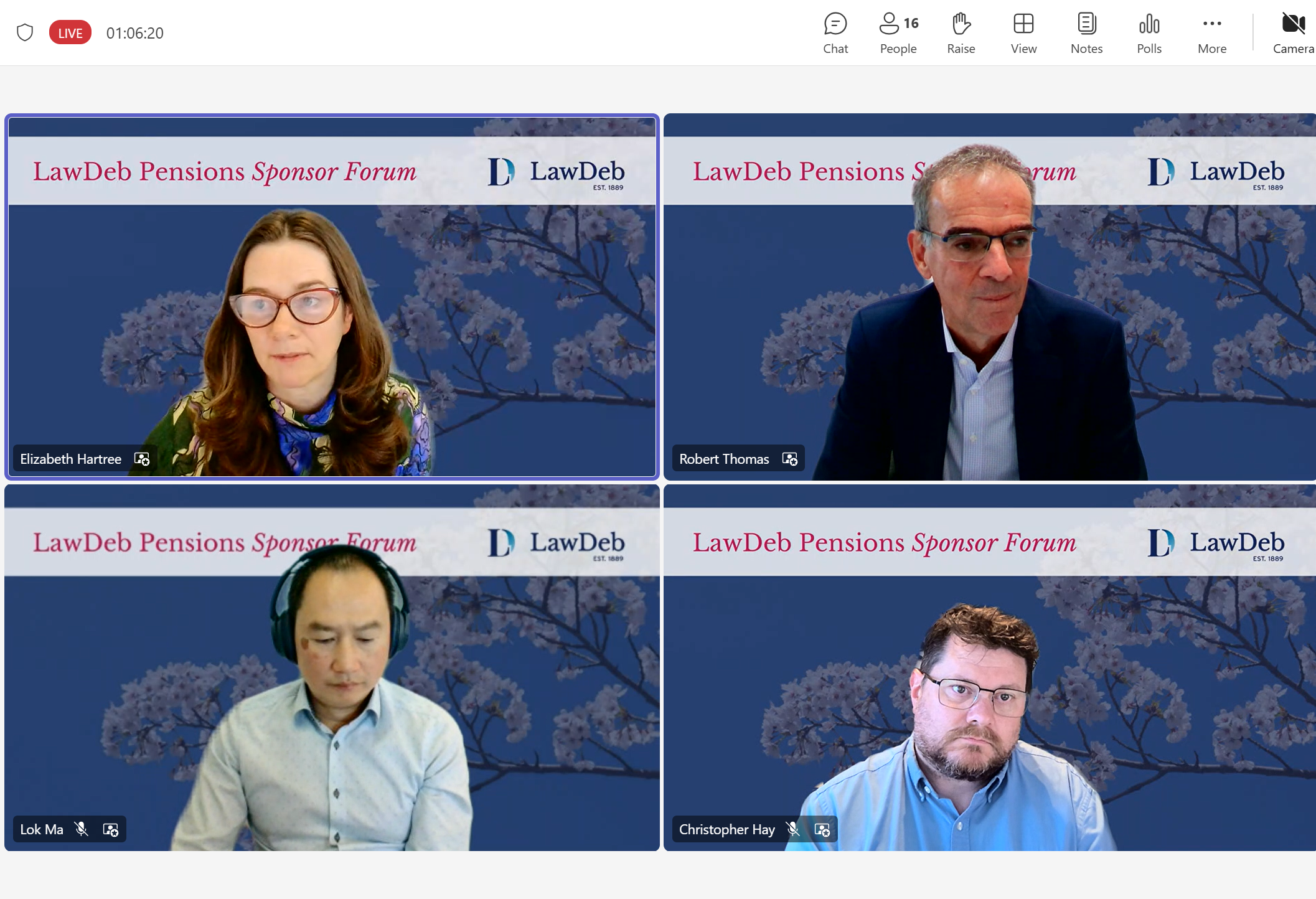
Defined contribution (DC) pensions are moving quickly. Contribution levels, value for money, consolidation and inheritance tax (IHT) changes are all competing for attention. At our recent employer webinar, our speakers covered the developments that matter most and then took questions from the audience. Here are the main points.
The government is consulting on a value for money (VFM) framework. It comes from a concern that some DC members may not be getting as much from their schemes as they could in a larger or better run arrangement. It also sits within a wider trend towards consolidation in UK pensions. We have seen similar moves in defined benefit through consolidation models and investment pooling, but the impact is especially direct in DC, where it affects how much members have to retire on.
The framework recognises that value for money is not simply about minimising fees. It should not become a race to the bottom. It is about what members receive for the money spent on their behalf, and two areas stand out.
Member service. Good outcomes are not only about investment returns. Better communications, tools and retirement support can help people make better decisions. Scale helps here, because larger schemes can invest more in administration, systems and online tools and spread the cost across more members.
Investment. The focus is on expected outcomes net of fees. Larger defaults can run more sophisticated portfolios, add asset classes for diversification and adjust when markets change. This is driving interest in illiquid assets within DC, often through the Long Term Asset Fund (LTAF), a relatively new regulated fund structure that suits DC. Many larger arrangements are building allocations, though these tend to be global rather than UK focused, which may be less than the government would ideally like.
Industry reaction so far is broadly positive. The open questions are how to compare schemes fairly given different membership profiles and investment strategies, and how much information commercial providers will be willing to share.
A common question from employers is whether they need to do anything further once their DC arrangement has moved to a third party provider with its own governance.
Pensions, and employer contributions in particular, remain a key part of the reward package, so employers still want to know they are getting value. Many keep a link through a governance committee. There is no mandatory template, which is often a strength because the structure can be designed around your workforce and organisation.
These forums are especially valued where a significant part of the workforce is unionised. Union representatives are an important channel for communications, and employees take reassurance from knowing someone they trust is still keeping an eye on their pension.
They also help with supplier management. Providers are increasingly responding with access to management information and/or a dashboard, a link to a key person on the master trust board, or invitations to town hall style events whose feedback can be taken back to the committee. Many committees meet fairly regularly in the first year after a transition, then once or twice a year.
From April 2027, unused pension funds will be brought within the scope of IHT, which could affect many DC pensions that have not been fully drawn down. The timings for providing information and paying the tax mean in house teams handling deaths in service may be under more pressure than usual to support bereaved families and personal representatives.
We are working with administrators on all arrangements, and particularly DC schemes, to check they have plans to implement the changes and that their processes, and their teams, can cope. This is not a simple extension of normal duties. It often needs a completely new workflow.
Employers should also check on the tax treatment any death in service benefits, which we understand will largely not be caught by IHT, but there are exceptions for some arrangements.
If you would like to talk through any of these developments and what they mean for your DC arrangement, get in touch with our team.
To find out more about or trusteeship and governance services for DC schemes do reach out to emma.sinnamon@lawdeb.com